Where monuments of peace meet the spirit of humanity. Discover the Canadian Museum of Indian Civilization – a place where history, art, and spirituality come alive.
Located on the CMIC grounds, the Peace Park was first unveiled in 2010 on World Peace Day. The park boasts beautiful gardens, and is home to following breathtaking monuments.
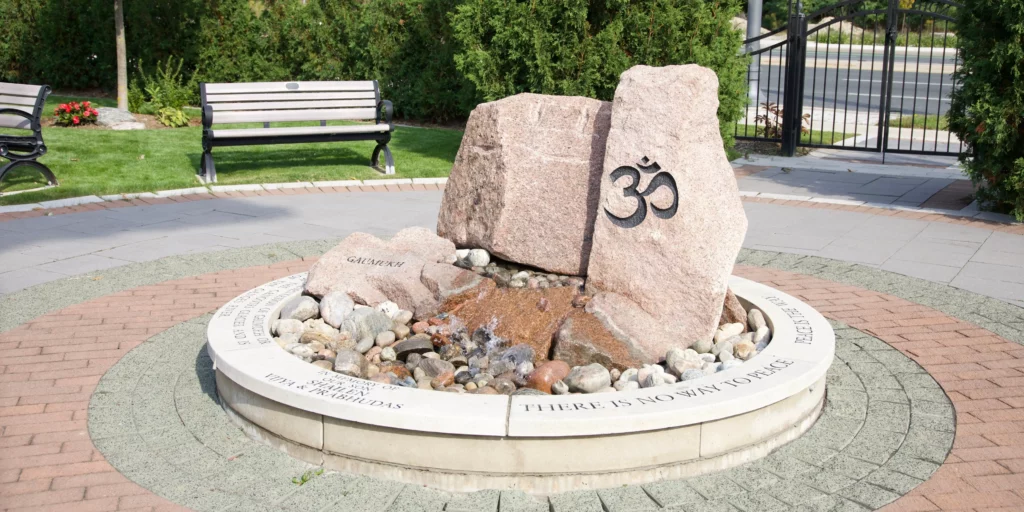
Gomukh Foundation
Gomukh fountain represents the origin of Ganga and depicts purity and knowledge.
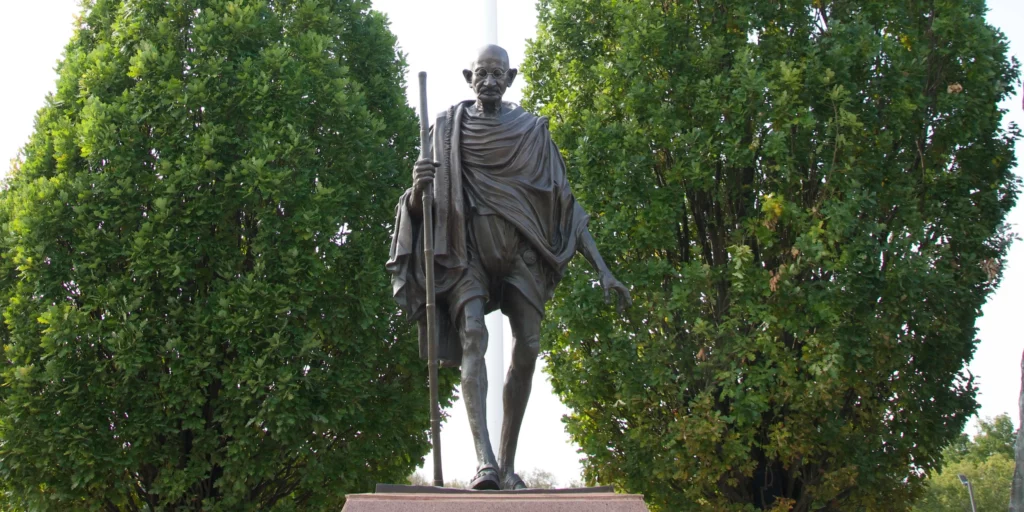
Mahatma Gandhi Statue
India’s historic icon of peace graces the Peace Park as its central feature to remind us that peace is the way.
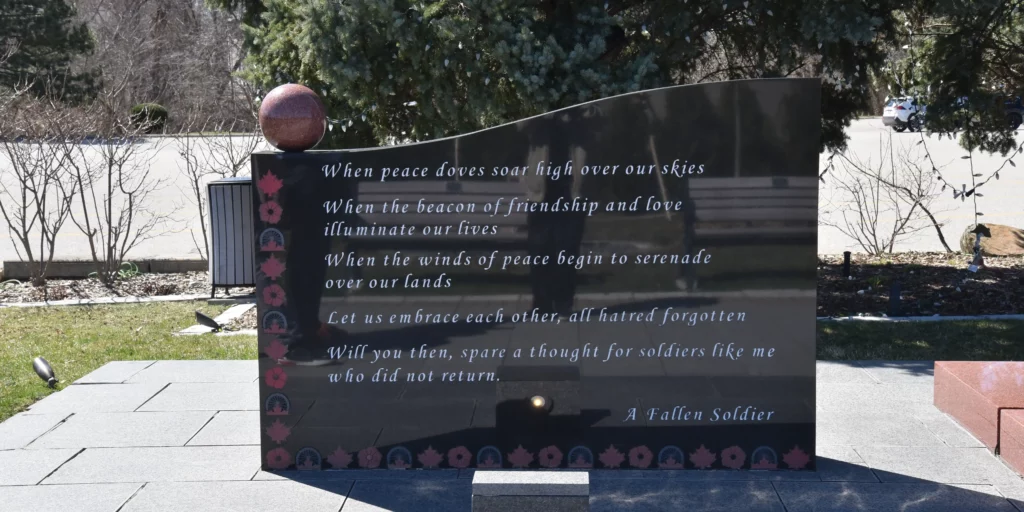
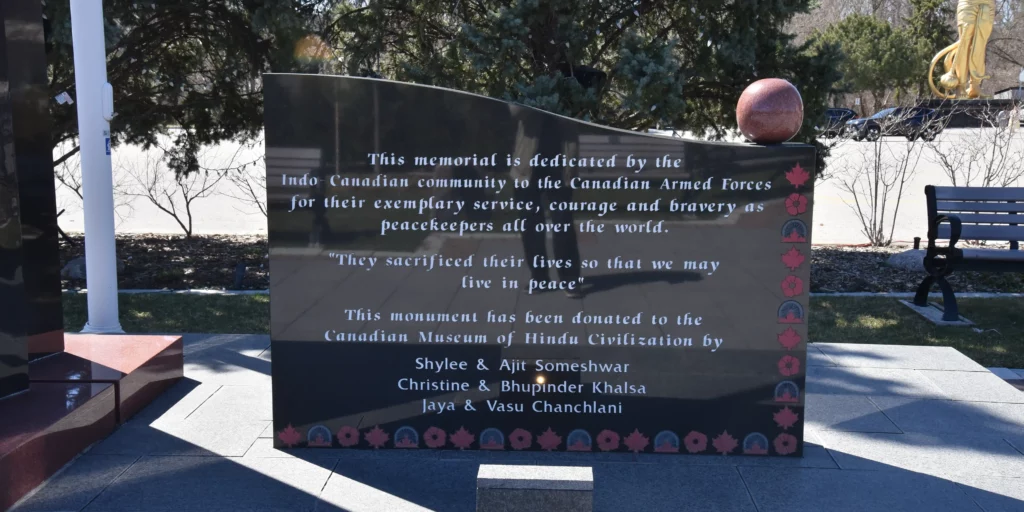
MEMORIAL TO A FALLEN SOLDIER
This magnificent monument captures the glory and heroism of our armed forces. Shaped as a maple leaf, it is exquisitely carved in black and Imperial red granite, sourced from southern India.
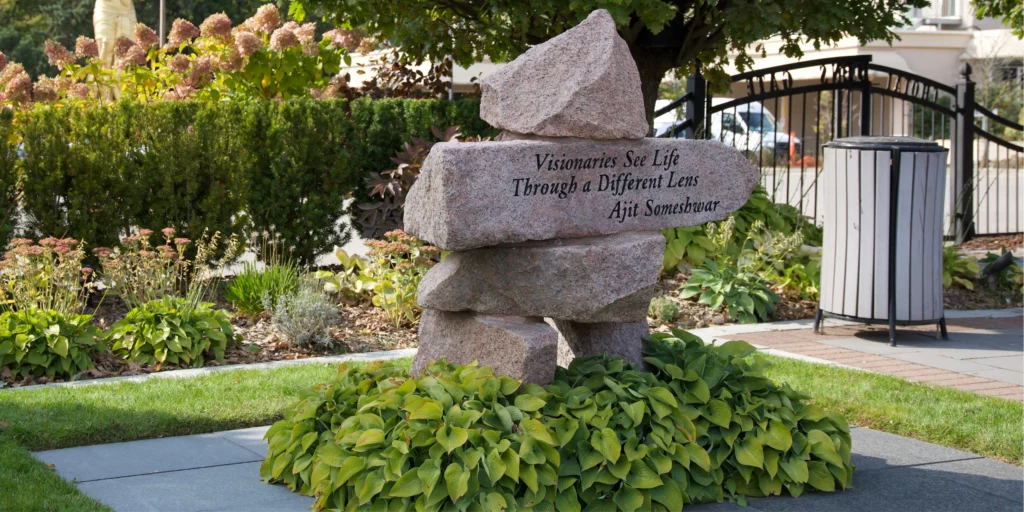
HOMAGE TO THE HERITAGE OF CANADA'S NATIVE INDIANS
The Peace Garden features Inukshuk – a stone landmark of the arctic aboriginal people that functions as a navigational marker of food, travel and shelter. It represents respect through recognition of the natives of North America.
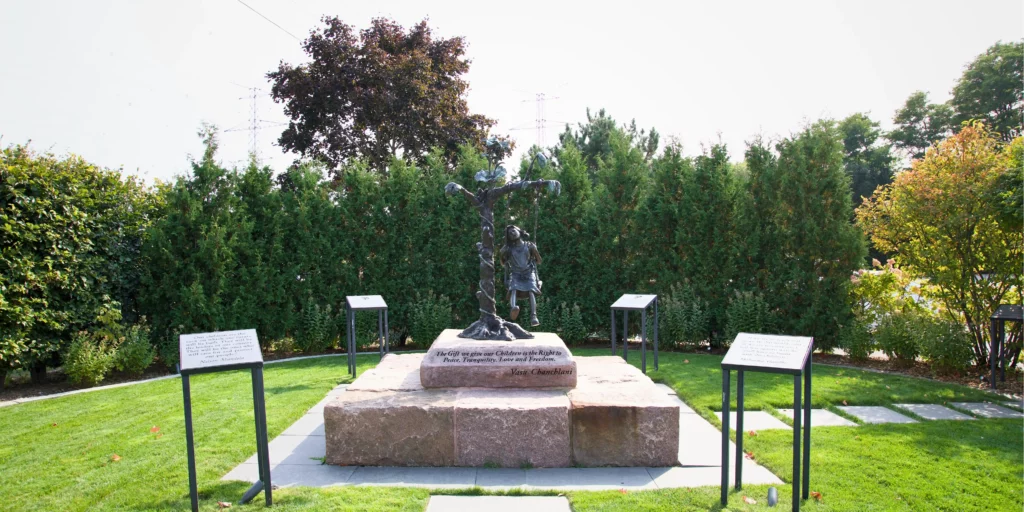
DONATED BY THE LATE PHILANTHROPIST VASU CHANCHLANI
DEDICATION TO CHILDREN. Remind visitors of the plight of starving children and our duty to see them happy on the swing. It also inspires us to make this world a better place.
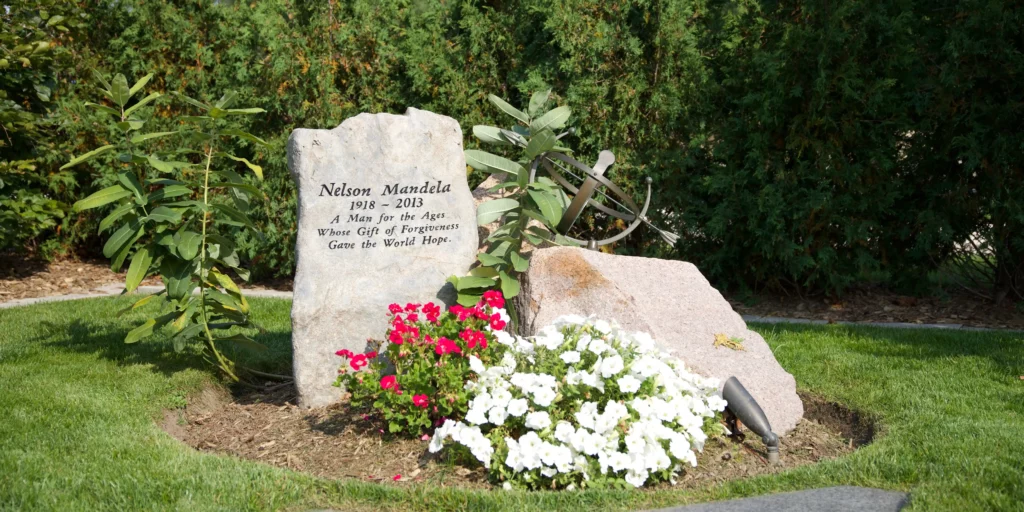
MEMORIAL OF NELSON MANDELA
This monument was erected on the death anniversary of Nelson Mandela. It was opened by the then South African ambassador. Nelson Mandela is one of the persons who restored order after many years of discrimination in South Africa.
IN FLANDERS FIELDS
“In Flanders Fields” is a war poem in the form of a rondeau, written during the First World War by Canadian physician Lieutenant-Colonel John McCrae. He was inspired to write it on May 3, 1915, after presiding over the funeral of friend and fellow soldier Lieutenant Alexis Helmer, who died in the Second Battle of Ypres. According to legend, fellow soldiers retrieved the poem after McCrae, initially dissatisfied with his work, discarded it. “In Flanders Fields” was first published on December 8 of that year in the London magazine Punch.